-
Nazi Literature in the Americas
by Roberto Bolaño / Fiction PB - $13.95
From Publishers Weekly:
The title chosen by Bolaño (1953–2003) for this slim, fake encyclopedia is not wholly tongue-in-cheek: given the very real presence of former (and not-so-former) Nazis in Latin America following WWII, this book, despite being fiction, still had j’accuse-like power when first published in 1996. The poets described herein, though invented, seem—even at their most absurd—plausible, which is the secret to this sly book’s devastating effect. And as one proceeds from an entry on Edelmira Thompson de Mendiluce (In high spirits, Edelmira asked for the Führer’s advice: which would be the most appropriate school for her sons?) to one on Carlos Ramírez Hoffman (His passage through literature left a trail of blood and several questions posed by a mute), it becomes clear that there is a single witness to all of these terrible figures, one who has spent time in one of Pinochet’s prisons and is bent on coolly totting up the crimes of fascism’s literary perpetrators. Some readers will recognize figures and episodes from Bolaño’s other books (including The Savage Detectives and Distant Star). The wild inventiveness of Bolaño’s evocations places them squarely in the realm of Borges—another writer who draws enormous power from the movement between the fictive and the real.
From Publishers Weekly:
Profound loss, desolation and rebuilding are the literal and metaphoric themes of Michaels’s exquisite second novel (after Fugitive Pieces). Avery Escher is a Canadian engineer recently moved to a houseboat on the Nile with his new wife, Jean, in 1964. Avery’s part of a team of engineers trying to salvage Abu Simbel, which is about to be flooded by the new Aswan dam. His wife, Jean, meanwhile, carries with her childhood memories of flooded villages and the heavy absence of her mother, who died when she was young. Now, the sight of the entire Nubian nation being evacuated from their native land before it’s flooded affects both Avery and Jean intensely. Jean’s pregnancy seems a possible redemption, but their daughter is stillborn, and Jean falls into despair, shunning the former intimacy of her marriage. When the couple returns to Canada, they set up separate lives and another man enters the picture. Michaels is especially impressive at making a rundown of construction materials or the contents of a market as evocative as the shared moments between two young lovers. A tender love story set against an intriguing bit of history is handled with uncommon skill.
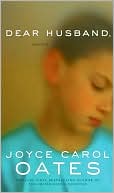
From Publishers Weekly:
The family ties that bind (and choke) are the overarching theme of Oates’s grim but incisive collection. The title story takes the form of a rambling letter from an Andrea Yates–like mother after her infanticide is completed, detailing her belief that God has instructed her to drown her five little children who have not turned out right. A Princeton Idyll gives us a series of letters between a chipper children’s author, granddaughter of a famous physicist, now deceased, and his sometimes sentimental, sometimes-bitter former maid; the result, in true Oatesian fashion, is dark family secrets and a good deal of denial. In Vigilante a son, struggling with his recovery from substance abuse, helps his unknowing mom by exacting revenge on his estranged dad. Special is told from the perspective of an elementary-school girl who moves toward desperate action watching her autistic older sister strain her parents’ marriage and, worse, garner all their attention. Throughout the collection, Oates seamlessly enters the minds of disparate characters to find both the exalted and depraved aspects of real American families.
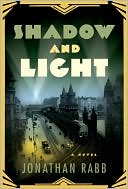
From Publishers Weekly:
Starred Review. Set in 1927 Germany, Rabb’s superb sequel to Rosa correlates the advent of talking movies with the rise of Nazism. When Kriminal-Oberkommisar Nikolai Hoffner investigates the apparent suicide of an Ufa film studio executive, the trail leads the Berlin policeman to the sex and drug trade as well as to the National Socialist German Workers Party’s local leader, Joseph Goebbels. Working with Helen Coyle, an attractive American talent agent for MGM, Hoffner learns how cutthroat the picture business is. Rumors of films with sound threaten to change the industry. Without sound, all you have is shadow and light, an inventor tells Hoffner. With sound, movies can do a lot more than entertain, as soon to be shown by Nazi propaganda films and newsreels. Rabb’s meticulous research brings to life a corrupt society vulnerable to extremism. Well-conceived cameos by director Fritz Lang and actor Peter Lorre add to the intrigue.
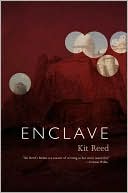
From Publishers Weekly:
In this gripping dystopian satire, ex-marine Sargent Whitmore has a plan to make millions while protecting children from the self-destructing modern world. He turns an old Mediterranean monastery into a combined impenetrable fortress and school, and enrolls 100 filthy-rich children, most of them already well-known for legal troubles, drug problems and paparazzi run-ins. Once there, everyone is cut off from the outside world, fed only canned news stories about wars and natural disasters. When things inevitably go horribly wrong, young hacker “Killer” Stade, physician assistant Cassie, drug and sex-crazed Sylvie and monastery-raised orphan Benny all attempt heroics, but remain deeply flawed. Reed (The Baby Merchant) displays unflinching willingness to explore all the facets of all of the characters, and her refusal to paint anyone as a simple villain makes this far more than a typical disaster novel.
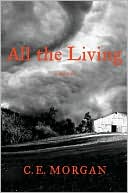
From Publishers Weekly:
Morgan’s enchanting debut follows the travails of a young woman who moves to Kentucky with her bereaved lover in 1984. Aloma, herself an orphan from a young age, leaves her job at the mission school where she was raised to help her taciturn boyfriend, Orren, with his family farm after his family is killed in a car accident. Once at the farm, he retreats into himself and working the land, leaving Aloma to wrestle with her desire to pursue her dream of being a concert pianist. As her relationship with Orren becomes more collision than cohabitation, Aloma finds in a local preacher a deep friendship that complicates her feelings for Orren, who drags his feet on marrying her. Young Aloma’s growing understanding of love and devotion in the midst of deep despair is delicately and persuasively rendered through the lens of belief—be it in religion, relationships or music. Morgan’s prose holds the rhythm of the local dialect beautifully, evoking the land, the farming lifestyle and Aloma’s awakening with stirring clarity.
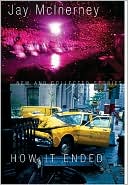
From Booklist:
McInerney’s name is most associated with his splashy first novel, Bright Lights, Big City (1985), which helped define contemporary urban-chic fiction. Other novels followed, and it may come as a surprise to readers of such trendy fiction as McInerney’s that he is a splendid short-story writer. He writes about the same people and places as in his novels; on the other hand, he certainly understands the special qualities of the short story, saying in the preface to this career-spanning collection of 26 stories that “a good one requires perfect pitch and a precise sense of form; it has to burn with a hard, gem-like flame.” His stories are reminiscent of those of F. Scott Fitzgerald, John O’Hara, and Irwin Shaw (in fact, a line from McInerney’s “Smoke” refers to women “in their summer dresses,” and one of Shaw’s most famous stories is entitled “Girls in Their Summer Dresses”). McInerney shares with these predecessors a focus on the appurtenances of his characters: that is, the personal accessories that give away the characters’ social status and intentions (but McInerney contemporizes his stories by detailing what drugs his characters take). A New York slant colors every story, even those not actually set there (as in “The Business,” in which a New York writer transplants himself to L.A. to write screenplays). Another outstanding story is “The Queen and I,” a brief, beautiful instance of self-recognition in the streets of Manhattan’s meatpacking district (“Poised on high heels, undulant with the exaggerated shimmy of courtship, a race of lanky stylized bipeds commands the street corners”). A very compelling collection.
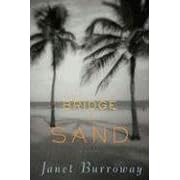
From Booklist:
By strange chance, her Pennsylvania senator husband’s funeral takes place on 9/11 within site of the smoking wreckage of United 93. As the country goes into shock, Dana, 38, sheds her high-profile, low-satisfaction life, takes to the highway, and returns to a small Georgia town where she lived briefly as a teenager and harbored a crush on an African American co-worker. She and Cassius now fall wildly in love, but malevolent forces drive them apart. Fleeing to Florida’s Gulf Coast, Dana soon finds herself tangled up in a web of shameful secrets, schemes, and betrayals. Burroway, known best for her popular creative-writng guides, revels in the beauty and dangers of hurricane country, where racial, class, and sexual conflicts surge and boil. With a possum in the kitchen, a snake in a piano, and a trailer-swallowing sinkhole, Dana, a brilliantly drawn character of conviction and adaptability, forges a surprising new identity. Suspense mingles with insight in this sensuous novel as Burroway reminds us that we can’t extract ourselves from the wider world, that everything is always in flux, and that to survive, one must hold on to kindness, fairness, and love.